city-guide
Mexico City World Cup 2026: The Complete City Guide
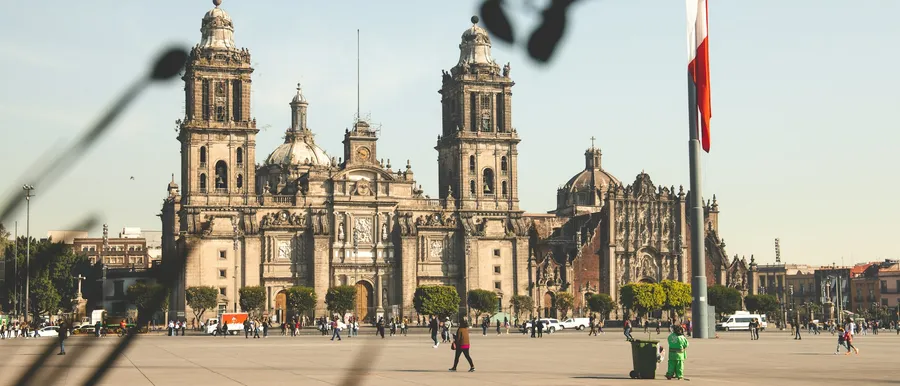
Photo by Carlos Aguilar on Unsplash
Mexico City World Cup 2026: The Complete City Guide
Mexico City isn’t just hosting the World Cup — it’s hosting the most matches of any Mexican city, including a quarterfinal at the iconic Estadio Azteca. With 7 matches over 25 days, CDMX will be the epicenter of World Cup energy in Mexico. This guide covers everything you need to plan your time in one of the world’s most exciting, overwhelming, and rewarding cities.
If you’re attending matches at Estadio Azteca, combine football with one of the richest cultural experiences on earth: ancient Aztec ruins, world-class museums, street food that will ruin you for tacos back home, and a nightlife scene that doesn’t stop until sunrise.
Quick Facts
- Matches at Estadio Azteca: 7 (5 group stage + Round of 32 + quarterfinal)
- Stadium capacity: 87,523
- Altitude: 2,240m / 7,350 ft (this matters — read the health section)
- Airport: Benito Juárez (MEX), 13 km from city center
- Population: 21+ million (metro area)
- Time zone: CDT (UTC-5), same as US Central
- Average June temperature: 18–26°C / 64–79°F
- Rainy season: June–October (afternoon showers, usually clear by evening)
World Cup Matches in Mexico City
Estadio Azteca has the biggest allocation of any Mexican venue. Here are the confirmed fixtures:
| Date | Match | Stage |
|---|---|---|
| June 11, 2026 | Mexico vs South Africa | Group A |
| June 17, 2026 | Uzbekistan vs Colombia | Group D |
| June 24, 2026 | Mexico vs UEFA Playoff D Winner | Group A |
| June 24, 2026 | South Korea vs South Africa | Group A (at Estadio BBVA, Monterrey) |
| June 30, 2026 | Group A Winner vs 3rd Place Qualifier | Round of 32 |
| July 5, 2026 | TBD vs TBD | Quarterfinal |
Plus additional group stage matches. The opening match of Mexico’s campaign (June 11, Mexico vs South Africa) will be electric. The quarterfinal on July 5 will be the last and biggest match in Mexico City.
Match-day timeline:
- Gates open ~3 hours before kickoff
- Arrive 2-3 hours early for security screening
- Nearest Metro: Estadio Azteca station (Line 12)
- Post-match: expect 60-90 minutes to clear the stadium area
See the full Mexico match schedule →
Where to Stay: Neighborhood Guide
Choosing the right neighborhood is the most important decision for your trip. Mexico City is massive — where you stay determines your entire experience.
Condesa & Roma — Best for First-Timers
Distance to Estadio Azteca: 30-40 min by Uber (~$4-6 USD)
The twin neighborhoods of Condesa and Roma are where most visitors fall in love with CDMX. Tree-lined streets, Art Deco architecture, sidewalk cafés, and the city’s best restaurant scene. Roma Norte specifically has the highest concentration of excellent restaurants per square block in Mexico.
Highlights:
- Parque México and Parque España — beautiful urban parks perfect for morning coffee
- Álvaro Obregón avenue — the pedestrian-friendly main artery with restaurants and bars
- Mercado Roma — upscale food hall with craft beer, tacos, and Mexican small plates
- Walking distance to everywhere you want to be
Stay here if: You want walkability, nightlife, great food at every price point, and a vibrant neighborhood atmosphere.
Budget: Hostels from $15 USD/night, boutique hotels $80-150 USD, luxury $200+
Polanco — Best for Luxury
Distance to Estadio Azteca: 45-55 min by Uber (~$6-8 USD)
Mexico City’s most upscale neighborhood. Think designer boutiques, Michelin-starred restaurants, and five-star hotels. Avenida Presidente Masaryk is the luxury shopping strip. The free Museo Soumaya (with its striking silver facade) anchors the neighborhood.
Highlights:
- Museo Soumaya and Museo Jumex — both free, both outstanding
- Pujol — currently ranked among the World’s 50 Best Restaurants (book weeks ahead)
- Parque Lincoln — leafy park with a weekend art market
- High-end hotel chains (St. Regis, W, Four Seasons, JW Marriott)
Stay here if: You want luxury hotels, fine dining, and a safe, polished environment.
Budget: Hotels from $150 USD, luxury $300-600+
Centro Histórico — Best for History & Budget
Distance to Estadio Azteca: 30 min by Uber (~$4-5 USD)
The beating heart of Mexico City since the Aztecs built Tenochtitlán here 700 years ago. The Zócalo (main square) is one of the largest plazas in the world, flanked by the Metropolitan Cathedral and the National Palace. Ruins of the Aztec Templo Mayor sit right next to colonial buildings. Raw, chaotic, historic, unforgettable.
Highlights:
- Zócalo — the main square, likely a FIFA Fan Zone location
- Palacio de Bellas Artes — Art Nouveau masterpiece with murals by Rivera and Orozco
- Templo Mayor — excavated Aztec ruins in the heart of the city
- Cantinas and rooftop bars with cathedral views
Stay here if: You’re on a budget, love history, and want to be near the action (likely Fan Zone location).
Budget: Hostels from $10 USD/night, hotels $40-80 USD, boutique $100-180
Coyoacán — Best for Proximity to the Stadium
Distance to Estadio Azteca: 15-20 min by Uber (~$3-4 USD)
The closest central neighborhood to the stadium. Coyoacán feels like a small town within the megacity — cobblestone streets, colorful buildings, and a relaxed bohemian vibe. It’s where Frida Kahlo lived and where Leon Trotsky was assassinated. The weekend market on the main plaza is one of the best in the city.
Highlights:
- Museo Frida Kahlo (Casa Azul) — book tickets online well in advance
- Jardín Centenario — the main plaza, perfect for people-watching with a coffee
- Mercado de Coyoacán — incredible tostadas and fresh juices
- Closest neighborhood to Estadio Azteca
Stay here if: Match-day convenience is your priority, or you prefer a quieter, more residential feel.
Budget: Airbnbs from $30 USD/night, hotels $60-120 USD
Where NOT to Stay
Avoid booking far-flung neighborhoods just because they’re cheap. Iztapalapa, Tepito, and areas east of the airport are not tourist-friendly. Stick to the neighborhoods above or their immediate surroundings.
Getting Around Mexico City
From the Airport
Aeropuerto Internacional Benito Juárez (MEX) is 13 km east of the city center.
- Uber/DiDi: 30-60 min depending on traffic, 150-300 MXN ($8-17 USD). Pick up from designated rideshare zones outside Terminal 1 and 2.
- Authorized airport taxis: Buy a fixed-rate ticket inside arrivals. Prices vary by destination zone (Centro ~250 MXN, Condesa ~300 MXN, Polanco ~350 MXN).
- Metro (budget option): Line 5 from Terminal Aérea station. Just 5 MXN but not recommended with luggage during rush hour.
Important: Some flights arrive at the newer Felipe Ángeles Airport (NLU), 45 km north of the city. Check your ticket — NLU requires a shuttle bus or longer Uber ride.
Daily Transport
| Mode | Cost | Best For |
|---|---|---|
| Metro | 5 MXN ($0.30) per ride | Budget travel, avoiding traffic |
| Metrobús | 7 MXN ($0.40) per ride | Reforma corridor, airport route |
| Uber/DiDi | $3-8 USD per ride | Convenience, night travel, groups |
| Walking | Free | Condesa, Roma, Centro, Polanco |
| Ecobici (bike share) | ~$5 USD/day | Short rides in flat neighborhoods |
Match-day transport: On World Cup match days, expect free or discounted Metro/Metrobús service with your FIFA FAN ID. The Metro Line 12 stops at Estadio Azteca station. Arrive early — trains will be packed.
Pro tips:
- Download Uber AND DiDi — compare prices, sometimes one surges while the other doesn’t
- Buy a rechargeable Metro/Metrobús card at any station (avoids single-ticket queues)
- Traffic peaks: 7-10 AM and 5-8 PM. Avoid Uber during these hours — the Metro is faster
- Google Maps works well for transit routing in CDMX
Food: What to Eat and Where
Mexico City is arguably the best food city in the Americas. Here’s your essential eating guide, from $1 street tacos to $200 tasting menus.
The Street Food You Must Try
These are non-negotiable. If you leave CDMX without eating all of these, you did it wrong.
Tacos al pastor — Marinated pork on a vertical spit (trompo), sliced to order with pineapple, onion, and cilantro. The defining taco of Mexico City. Look for any stand with a visible spinning trompo. Best late at night.
Quesadillas — Not just cheese. At CDMX markets, these come with exotic fillings: huitlacoche (corn truffle), flor de calabaza (squash blossom), chicharrón prensado (pressed pork rind). Controversial fact: in CDMX, a quesadilla doesn’t necessarily come with cheese — you have to ask for “con queso.”
Tlacoyos — Thick, oval blue-corn masa cakes stuffed with beans, fava beans, or requesón (fresh cheese), topped with nopales, salsa, and cream. A pre-Hispanic food that’s still everywhere.
Elote & esquites — Grilled corn on the cob (elote) or in a cup (esquites) with mayo, chili powder, lime, and cheese. Available from street carts everywhere.
Tamales & atole — The classic CDMX breakfast combo. Steamed corn masa filled with mole, rajas, or sweet fillings, paired with atole (warm, thick, flavored corn drink). Street vendors start at 6 AM.
Birria — Slow-braised beef stew, originally from Jalisco but now a CDMX obsession. Try birria tacos — tortillas dipped in the red consomé and griddled until crispy.
Best Markets for Food
- Mercado de San Juan — The gourmet market. Exotic meats (crocodile, lion, wild boar), imported cheeses, fresh seafood, and outstanding prepared food stalls.
- Mercado de Coyoacán — Local and authentic. Famous tostadas and the best fruit juices.
- Mercado de Jamaica — Mexico’s largest flower market, with incredible food stalls hidden among the flowers.
- Mercado de la Merced — Massive, chaotic, and deeply authentic. The largest traditional market in the Americas.
Restaurants Worth a Reservation
- Pujol (Polanco) — Enrique Olvera’s flagship, World’s 50 Best. The mole madre (two moles, one aged 2,500+ days) is legendary. Book 2-3 weeks ahead.
- Quintonil (Polanco) — Also World’s 50 Best. Seasonal, refined Mexican cuisine. Slightly easier to book than Pujol.
- Contramar (Roma) — The best seafood in CDMX. The red-and-green grilled fish (tostadas de atún) is iconic. Go for lunch.
- El Vilsito — By day, a mechanics’ shop. By night, one of the city’s best taco stands. Open from 9 PM. Cash only.
- Máximo Bistrot (Roma) — Market-driven, seasonal menu. Outstanding value for the quality.
Drinks
- Mezcal: La Clandestina (Condesa), Bósforo (Centro), Sabina Sabe (Roma)
- Pulque: Pulquería Los Insurgentes (Roma) — try the ancient fermented agave drink
- Craft cocktails: Licorería Limantour (Roma) — consistently ranked among the world’s best bars
- Craft beer: Falling Piano Brewing House (Roma), Beer Hall Coyoacán
Nightlife & World Cup Atmosphere
Expected FIFA Fan Zones
FIFA Fan Fest locations in CDMX are expected at:
- Zócalo — the main square, with capacity for tens of thousands and giant screens
- Paseo de la Reforma — Mexico’s grand boulevard, likely closed to traffic for fan events
- Estadio Azteca surrounding area — pre-match fan zones on match days
Details will be confirmed by FIFA closer to the tournament. Follow mexi.co for updates.
Best Bars for Match Watching
- Terraza Cha Cha Chá (Centro) — rooftop with views of the Metropolitan Cathedral. Multiple screens.
- Patrick Miller (Centro/Alamos) — legendary dance hall that will almost certainly host viewing parties
- Beer Factory (multiple locations) — big screens, craft beer, Mexican pub food
- La Ópera (Centro) — historic cantina where Pancho Villa reportedly shot the ceiling. Perfect for a pre-match drink.
After the Match
Post-match nightlife will be concentrated in:
- Condesa/Roma — bar hop along Álvaro Obregón and Colima streets
- Centro — rooftop bars and cantinas around the Zócalo
- Coyoacán — more relaxed cantinas near the stadium
Expect bars to stay open late (2-4 AM) during the World Cup. Mexico City nightlife doesn’t really start until 10-11 PM.
A 5-Day Mexico City World Cup Itinerary
Here’s how to combine World Cup matches with the best of CDMX:
Day 1: Arrive & Acclimatize
- Arrive, check in, rest (altitude adjustment)
- Easy walk around your neighborhood
- Light dinner in Condesa or Roma
- Early night — you need to adjust to 2,240m altitude
Day 2: Centro Histórico
- Morning: Zócalo, Metropolitan Cathedral, Templo Mayor
- Lunch: Street food around Centro (tlacoyos, quesadillas)
- Afternoon: Palacio de Bellas Artes, walk down Madero street
- Evening: Cantina dinner at La Ópera or Salón Corona
Day 3: Match Day
- Morning: Relax, hydrate, eat well
- Midday: Head to the Fan Zone at Zócalo or Reforma for pre-match atmosphere
- Afternoon/Evening: Match at Estadio Azteca (arrive 3 hours early)
- Post-match: Celebrate in Condesa/Roma bars
Day 4: Culture & Food Deep Dive
- Morning: Museo Nacional de Antropología (allow 3+ hours — it’s massive)
- Lunch: Contramar (book ahead) or tacos at El Vilsito (if you can wait until 9 PM)
- Afternoon: Chapultepec Castle for panoramic views, walk through Chapultepec Park
- Evening: Mezcal tasting at La Clandestina, dinner in Roma Norte
Day 5: Coyoacán & Departure (or Day Trip)
- Morning: Museo Frida Kahlo (book online in advance), walk Coyoacán’s streets
- Lunch: Mercado de Coyoacán (tostadas, fruit juices)
- Afternoon: Option A — Xochimilco canals (3-4 hours), or Option B — depart
Extended stay? Add a day trip to Teotihuacán (pyramids, 50 km away, go early morning) and a full day exploring Polanco (Museo Soumaya, Pujol dinner).
Health & Safety
Altitude Sickness
This is real and affects most sea-level visitors. At 2,240m:
- Days 1-2: You may feel headaches, shortness of breath, fatigue, light-headedness
- What helps: Drink 3-4 liters of water daily, avoid alcohol on day 1, eat light meals, don’t overexert
- What doesn’t help: Ignoring it. Take it seriously, especially if attending a match on day 1
- When to worry: Severe headache, vomiting, or confusion — seek medical attention
Safety
Mexico City is generally safe for tourists in the recommended neighborhoods:
- Use Uber/DiDi, not street taxis
- Keep phone and wallet in front pockets in crowded areas (Metro, markets)
- Avoid walking alone in unfamiliar areas late at night
- Don’t flash expensive jewelry, cameras, or watches
- The emergency number is 911
- Tourist police helpline: 078
Water & Food Safety
- Never drink tap water. Bottled water only (every restaurant and hotel has it)
- Ice in restaurants = almost always purified. Safe to consume.
- Street food from busy stalls = safe. Follow the crowds.
- Wash or peel fruit before eating if bought from markets
Practical Details
| Detail | Info |
|---|---|
| Language | Spanish. English understood in tourist areas, hotels, Uber drivers. |
| Currency | Mexican Peso (MXN). ~$1 USD = 17-20 MXN |
| Tipping | 10-15% at restaurants (check if included). Round up for Uber. |
| Electricity | 127V, 60Hz. US/Canadian plugs (Type A/B). Euro/UK travelers need adapter. |
| SIM/eSIM | Buy eSIM before arrival or Telcel SIM at any OXXO. 5GB for ~$15 USD. |
| OXXO | Convenience stores on literally every block. ATM, snacks, phone credit, water. |
Frequently Asked Questions
How many World Cup matches are in Mexico City?
Seven — 5 group stage matches, 1 Round of 32, and 1 quarterfinal, all at Estadio Azteca. Mexico City hosts more matches than any other Mexican venue.
Is the altitude really a problem?
For most people, yes — especially in the first 24-48 hours. At 2,240m, you’re getting about 25% less oxygen than at sea level. Drink lots of water, avoid heavy alcohol consumption on arrival, and don’t plan strenuous activities on day 1. If you’re attending a match on your first day, arrive early and take it easy.
What’s the best neighborhood to stay in for the World Cup?
For most visitors: Condesa or Roma. Great food, nightlife, walkable, and 30-40 min to the stadium. If match-day proximity is your priority: Coyoacán (15-20 min to Estadio Azteca). If you want luxury: Polanco. If you’re on a budget: Centro Histórico.
How do I get to Estadio Azteca?
Metro Line 12 to Estadio Azteca station (closest option). Uber/DiDi to designated drop-off zones on Calzada de Tlalpan. On match days, expect road closures around the stadium — public transport is strongly recommended.
Is it safe to walk around Mexico City at night?
In tourist neighborhoods (Condesa, Roma, Polanco, Centro’s main streets), yes — these areas are lively at night with plenty of people. Use rideshare apps for longer distances. Avoid walking alone in unfamiliar or poorly lit areas.
What should I pack for Mexico City in June?
Light layers — days are warm (25°C) but evenings can be cool (16°C). A light rain jacket is essential (afternoon showers are daily in June). Comfortable walking shoes. Sunscreen and a hat for match days. A reusable water bottle.
Related Guides
- The Ultimate Mexico World Cup 2026 Travel Guide — Complete overview of all three host cities
- Guadalajara World Cup Guide — Tequila country and Estadio Akron
- Monterrey World Cup Guide — Mountains, carne asada, and Estadio BBVA
- World Cup 2026 Match Schedule — All 13 Mexico fixtures
- Mexico Travel Tips — Visas, currency, safety essentials
We may earn a commission from purchases made through affiliate links in this article. This helps us keep mexi.co free and up-to-date. We only recommend products and services we genuinely believe will improve your World Cup experience.